


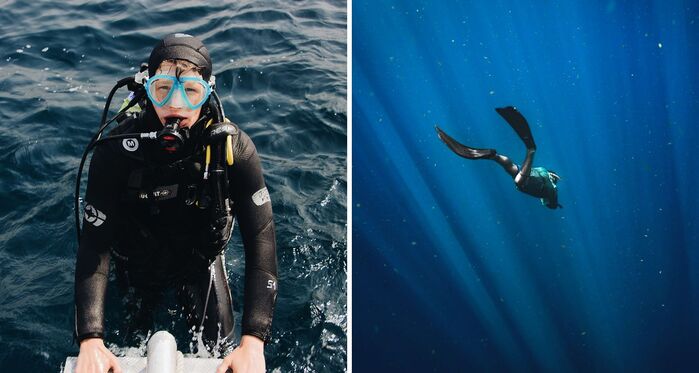
Free diving is one of the purest ways to explore the underwater world. With no tanks or heavy equipment, just a single breath of air, divers can experience a sense of freedom and connection to the ocean that’s hard to match. But one question many people ask when starting out is: how deep can the average person free dive?
The answer depends on a few factors, including experience, technique, and physical fitness. Let’s take a closer look at what influences depth and what you can expect as an average free diver.
What Is Free Diving?
Free diving is diving underwater while holding your breath, without the use of scuba gear or breathing apparatus. It’s different from snorkelling, where you stay at the surface, and different from scuba diving, where you rely on compressed air.
There are various forms of free diving, from casual recreational dives in shallow waters to competitive events where athletes push the limits of depth and breath-hold time.
Average Depth for Untrained Individuals
For someone with no formal training or experience, the average free dive usually reaches around 3 to 5 metres. At this depth, you’ll start to feel the effects of water pressure, and equalising your ears may become challenging if you’re not familiar with the technique.
Many beginners feel comfortable staying near the surface, gradually building confidence before attempting deeper dives.
How Deep Can a Recreational Free Diver Go?
With some practice and basic training, recreational free divers can often reach depths of 10 to 20 metres. This range is common for those who free dive regularly but aren’t necessarily aiming for extreme depths.
At these depths, divers need to be proficient in equalising, managing buoyancy, and staying relaxed to conserve oxygen. Using fins and a streamlined approach also helps improve efficiency and depth.
Factors That Influence Free Diving Depth
Several key factors affect how deep an individual can free dive:
- Lung capacity and breath-hold ability: The bigger your lung capacity and the more efficiently you use oxygen, the longer and deeper you can dive.
- Equalisation skills: Equalising the pressure in your ears and sinuses is critical for comfort and safety at depth. Poor equalisation technique can limit how deep you’re able to go.
- Physical fitness: General fitness, especially cardiovascular health and leg strength, plays a role in how efficiently you move through the water.
- Relaxation and mental control: Staying calm underwater conserves oxygen and helps delay the urge to breathe. Anxiety increases oxygen use and shortens dive time.
- Use of fins and gear: Wearing long-blade fins and a streamlined mask can reduce energy expenditure, allowing you to dive deeper.
To better understand how depth is achieved and the physiological limits involved, explore more insights on how deep can you free dive safely and effectively.
Risks of Diving Deeper Without Training
It’s important to recognise that diving deeper carries additional risks. Attempting depth without proper training increases the chance of:
- Shallow water blackout
- Lung squeeze or barotrauma
- Inability to equalise
- Disorientation or panic underwater
Always dive within your limits, never dive alone, and consider enrolling in a free diving course to learn essential safety skills.
How to Safely Increase Your Free Diving Depth
If you want to improve your depth safely:
- Take a certified free diving course with an experienced instructor
- Practise breath-hold techniques and relaxation exercises on land
- Increase depth gradually, with a buddy or instructor present
- Focus on proper equalisation and efficient finning technique
World Records vs. Average Depth
For fun perspective, the current world record for the deepest free dive is an astonishing 214 metres under the “No Limits” category. Competitive free divers train for years to reach these extremes.
In contrast, the average recreational diver enjoys exploring depths between 10 and 20 metres—more than enough to experience fascinating marine life and underwater landscapes.
Final Thoughts: How Deep Should You Dive?
How deep you choose to free dive ultimately depends on your comfort, experience, and training. For the average person, 5 to 10 metres is a safe and enjoyable depth to explore. With practice and guidance, reaching 15 to 20 metres is achievable for many recreational free divers.
Remember, free diving isn’t just about chasing numbers—it’s about enjoying the underwater world while staying safe and respecting your body’s limits. Dive smart, dive safe, and enjoy every breath-hold adventure.
