


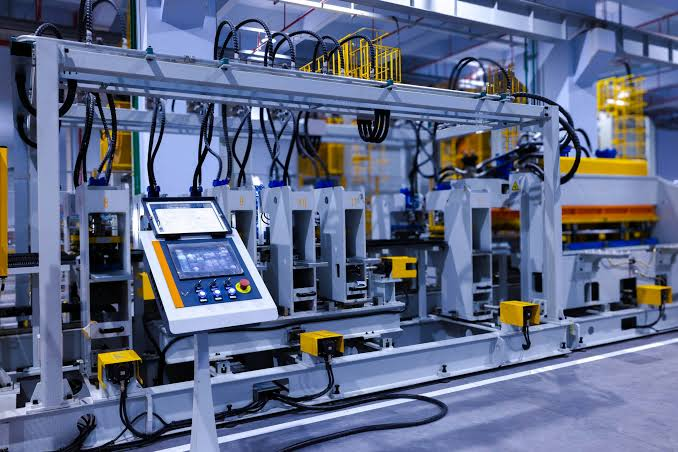
Modern manufacturing is undergoing a major transformation driven by automation, digital technologies, and increasingly demanding product requirements. From electronics and automotive components to industrial equipment, manufacturers are looking for production methods that deliver higher accuracy, faster development cycles, and consistent quality.
Among these technologies, Computer Numerical Control (CNC) machining remains one of the most important manufacturing solutions. By combining advanced software, precision machinery, and skilled engineering expertise, CNC machining enables companies to produce complex components with exceptional dimensional accuracy.
As industries continue moving toward lightweight designs and high-performance materials, advanced machining technologies are becoming increasingly important for next-generation products.
The Role of Precision Manufacturing in Modern Technology
Many modern products depend on components that require extremely tight tolerances and reliable performance. Smartphones, electric vehicles, robotics systems, medical equipment, and aerospace products all require precision-engineered parts.
Traditional manufacturing methods often struggle to meet the complex geometries and accuracy requirements of today’s industries. CNC machining provides manufacturers with the flexibility to produce prototypes, low-volume components, and high-volume production parts while maintaining consistent quality.
Through CAD/CAM programming and automated machining processes, engineers can transform digital designs into physical components with high repeatability.
Why Aluminum Has Become a Key Material for Advanced Manufacturing
Aluminum is one of the most widely used materials in precision manufacturing because of its excellent combination of lightweight properties, strength, corrosion resistance, and machinability.
Industries such as electronics, automotive, aerospace, and industrial automation frequently choose aluminum components because they provide reliable performance while reducing overall product weight.
For applications requiring complex shapes and precise dimensions, aluminum machining offers manufacturers the ability to create customized components that meet specific engineering requirements.
Common aluminum CNC machined parts include:
- Electronic housings and enclosures
- Structural components
- Heat dissipation parts
- Automotive precision components
- Prototype assemblies
The ability to efficiently process aluminum alloys makes CNC machining an important technology for companies developing innovative products.
Swiss Machining Technology for High-Precision Components
As products become smaller and more complex, manufacturers require machining processes capable of producing miniature and highly accurate components.
Swiss machining technology was originally developed for the watchmaking industry but has evolved into an advanced manufacturing method used across electronics, medical devices, automotive systems, and precision equipment.
Unlike conventional turning processes, Swiss machining supports excellent stability when producing long, slender, and small-diameter components.
For manufacturers working with aluminum materials, understanding the relationship between machine capabilities, tooling selection, and material characteristics is essential. A detailed Swiss machining aluminum approach helps engineers optimize cutting parameters, surface finishes, and production efficiency.
The Growing Importance of Multi-Axis CNC Machining
Modern product designs often include complex geometries that cannot be efficiently produced using traditional machining methods.
Multi-axis machining allows cutting tools to approach components from multiple directions, reducing the need for multiple setups and improving overall accuracy.
Among these technologies, 5-axis CNC machining has become increasingly valuable for industries requiring complex aluminum components.
Advantages include:
- Reduced setup time
- Improved surface quality
- Better machining accuracy
- Ability to produce complex geometries
- Higher production efficiency
Engineers evaluating advanced manufacturing solutions can benefit from understanding the capabilities of a 5-axis CNC machining guide before selecting the right production method.
CNC Machining and the Future of Digital Manufacturing
The future of manufacturing will continue to be shaped by automation, artificial intelligence, and connected production systems.
Modern CNC machines are increasingly integrated with:
- Digital manufacturing software
- Automated inspection systems
- Real-time production monitoring
- Smart factory technologies
These developments allow manufacturers to improve productivity while maintaining strict quality standards.
For companies developing advanced products, choosing the right machining partner is becoming just as important as selecting the right technology. Manufacturers with experience in material selection, precision machining, and quality control can help transform innovative designs into reliable products.
Conclusion
Advanced CNC machining technology plays a critical role in modern manufacturing by enabling companies to produce accurate, lightweight, and complex components for demanding industries.
From aluminum components used in electronics to precision parts for automotive and industrial applications, CNC machining continues to support innovation across multiple sectors.
As manufacturing becomes more digital and technology-driven, precision machining will remain a fundamental capability for companies seeking competitive advantages in product development and production efficiency.
