


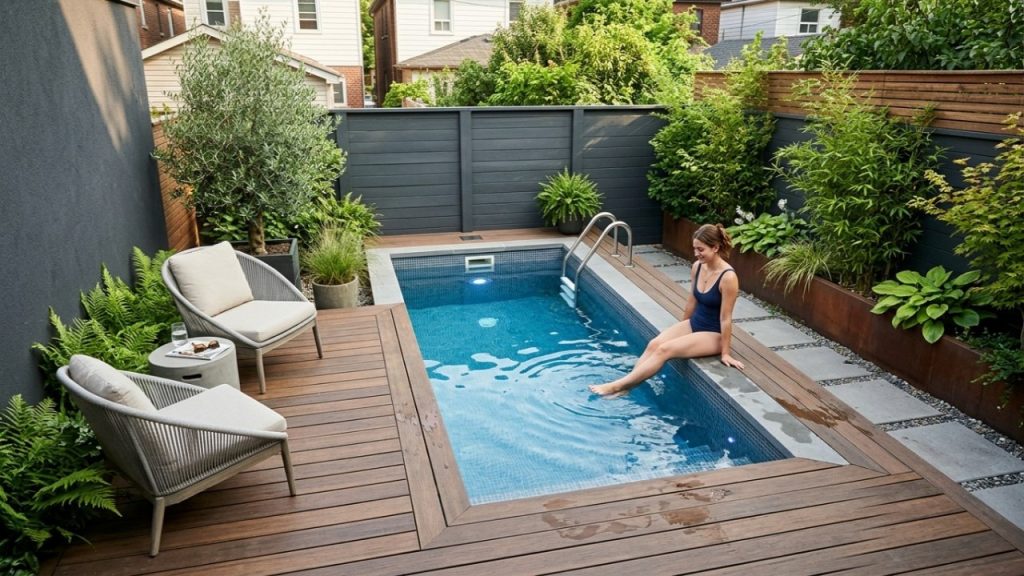
Surviving a peak Australian summer is a true test of endurance for any backyard property. When the mercury pushes past thirty-five degrees and the UV index sits firmly in the extreme category for hours on end, the physical and chemical stress placed on a body of water is immense. For property owners, the months of January and February often feel like a constant, frustrating battle against the threat of green water. You can perfectly balance your chemistry on a Friday evening, only to wake up on Sunday morning to find the water dull, cloudy, and visibly blooming with aggressive algae.
This rapid deterioration is not due to a lack of effort; it is a direct consequence of the harsh environmental conditions unique to the Australian climate. The combination of intense ultraviolet radiation and soaring water temperatures creates the perfect incubator for biological growth. To keep your backyard oasis pristine during a scorching heatwave, you cannot simply rely on pouring extra jugs of liquid chlorine into the deep end and hoping for the best. You must implement a calculated, two-tier defensive strategy that actively manages the hot surface layer where algae spores breed, whilst simultaneously executing heavy, mechanical extraction on the floor.
The Chemistry of UV Degradation and Thermal Stratification
To win the battle against summer algae, you first have to understand how the sun actively disarms your chemical defences. Chlorine is a highly volatile oxidiser. When unprotected liquid or granular chlorine is exposed to direct ultraviolet sunlight, the UV radiation breaks the bonds of the hypochlorite ions. On a clear, cloudless summer day in Australia, the sun can completely destroy a standard dose of unstabilised free chlorine in a matter of hours.
To combat this, we use Cyanuric Acid (CYA), commonly known as stabiliser. Think of CYA as a microscopic sunscreen for your chlorine molecules, shielding them from the UV rays and allowing them to remain active in the water. However, even with the perfect level of stabiliser, the intense heat creates a secondary physical problem known as thermal stratification.
During a heatwave, the top fifteen to twenty centimetres of your water absorb the brunt of the solar radiation. This surface layer becomes significantly hotter than the water resting in the deep end hopper. Because hot water is less dense, it sits stubbornly on the top, refusing to mix with the cooler water below unless physically agitated. Algae spores, which constantly blow into your yard on the hot summer winds, land directly in this hot, stagnant, upper layer. With the heat accelerating their cellular replication and the UV rays rapidly burning off the local chlorine residual, this surface zone becomes an immediate breeding ground for a green outbreak.
Tier 1: Agitating and Clearing the Incubation Zone
The first tier of your defence must focus exclusively on this vulnerable surface layer. If you wait for the algae spores to saturate the hot top layer, sink, and attach themselves to your walls, you have already lost the initial skirmish. You have to intercept the threat at the exact point of entry.
Relying purely on your main filtration pump and wall skimmer box to manage the surface during a heatwave is an inefficient strategy. Your wall jets may push the water around, but they often fail to thoroughly break up the thermal stratification in the centre of the water. To actively disrupt the breeding ground, you need consistent, roving surface agitation.
Deploying an autonomous, cordless pool skimmer throughout the hottest parts of the day is a game-changer for summer maintenance. These agile devices roam the entire surface area, constantly churning the top layer of water. This continuous physical movement violently disrupts the hot, stagnant thermal layer, forcing the warm water to mix with the cooler, highly chlorinated water from below. Furthermore, as the device navigates the surface, it actively traps incoming airborne dirt, fine pollen, and the actual algae spores themselves before they have a chance to settle and bloom. By aggressively managing the physical state of the surface water, you deny the algae the hot, still environment it needs to multiply.
Tier 2: Extracting the Dead Biological Dust
Even with excellent surface management, a sudden drop in chlorine levels after a heavy weekend pool party can still result in a minor algae bloom. When this happens, homeowners correctly respond by hitting the water with a heavy dose of chemical shock to kill the outbreak. However, killing the algae is only half of the job.
When a shock treatment successfully ruptures the cellular walls of the algae, the biological matter dies and turns into a fine, white or grey dust. This dead cellular dust sinks directly to the floor. If you leave it sitting there, it creates two major issues. Visually, it makes the water look milky and cloudy whenever someone jumps in and stirs it up. Chemically, that dead biological matter acts as a massive food source for the next generation of algae spores blowing in on the wind.
Your main filtration pump will struggle to pull this heavy, sunken dust all the way up from the floor and into the skimmer box. To truly reset the environment, you must execute the second tier of the strategy: aggressive, sub-surface mechanical extraction.
When you research the best robotic pool cleaner Australia has to offer for local conditions, you must seek out hardware equipped with ultra-fine, corrugated filter cartridges and high-traction scrubbing brushes. Standard mesh baskets will simply blow the fine algae dust straight out the exhaust port. You need an automated floor unit that can drive systematically across the pebblecrete or fibreglass, physically scrubbing the surface to loosen any stubborn, lingering algae, while using massive downward suction to pull the dead cellular dust into the ultra-fine pleated filters. By physically removing the dead organic matter from the floor, you permanently extract the food source, breaking the cycle of recurring blooms.
The Mid-Summer Chemical Balancing Routine
Hardware alone cannot defeat a summer heatwave; your chemical foundation must be rock solid. During the peak months of January and February, abandon your relaxed off-season testing schedule and implement this rigid, weekly balancing routine to ensure your sanitisers survive the intense UV load.
- Test the Water at Dusk: Never test your free chlorine levels in the middle of a hot afternoon; the active sun will give you a falsely low reading. Always take your water samples at dusk, after the sun has set, to measure your true chemical baseline.
- Audit the Stabiliser (CYA) Levels: Use a high-quality drop test kit to check your Cyanuric Acid. For an outdoor, saltwater or liquid chlorine setup in Australia, you must maintain a strict CYA level between 30 and 50 parts per million (ppm). Anything lower, and the sun will destroy your chlorine; anything higher, and the stabiliser will actually lock up the chlorine, rendering it useless.
- Anchor the Total Alkalinity: Before adjusting your pH, ensure your Total Alkalinity (TA) is sitting firmly between 80 and 120 ppm. A stable TA prevents your pH from bouncing erratically during heavy summer storms or after large bather loads.
- Drag the pH Down: Algae thrives in high pH environments, and chlorine loses a massive percentage of its killing power when the pH spikes above 7.8. Use hydrochloric acid to carefully drag your pH down to a strict 7.2 or 7.4.
- Execute the Evening Shock: If the water looks slightly dull, or if you have just hosted a massive weekend barbecue, administer a heavy dose of liquid chlorine directly over the return jets late at night. Shocking in the dark gives the chlorine eight to ten solid hours to oxidise organic waste without fighting the sun.
Protecting Your Hardware from the Sun
While you rely on your advanced hardware to protect your water from the summer heat, you must also protect the hardware itself. The very same UV radiation that destroys your chlorine will aggressively degrade the plastics and rubber components of your expensive equipment if left exposed. Lithium-ion batteries, in particular, are highly sensitive to thermal stress. Leaving a cordless machine baking on the hot concrete deck will permanently destroy the battery chemistry.
Watch closely for these critical signs of UV stress and heat damage on your equipment:
- Fading, chalky, or brittle plastic on the exterior housing, indicating severe UV bleaching and a loss of structural integrity.
- Drive tracks or scrubbing brushes that feel sticky, mushy, or leave black rubber marks on the concrete, signalling that the rubber compounds are melting and breaking down from extreme heat exposure.
- Charging terminal pins that show signs of accelerated corrosion or warping due to being plugged in while the internal battery is physically hot from sitting in the sun.
- A sudden, drastic reduction in the machine’s overall run time, which is the primary indicator that the internal lithium-ion cells have suffered permanent capacity loss from thermal stress.
Surviving the brutal Australian summer does not require endless hours of manual labour; it simply requires a smarter, more tactical approach. By understanding how intense UV radiation and thermal stratification create the perfect breeding ground for algae, you can proactively dismantle that environment. Agitating the hot surface layer to intercept airborne spores, whilst systematically scrubbing the floor to extract dead biological waste, forms an impenetrable two-tier defence. Combine this heavy mechanical extraction with a rigid, evening-based chemical routine, and your backyard oasis will remain crystal clear, safe, and inviting, no matter how high the mercury climbs.
