


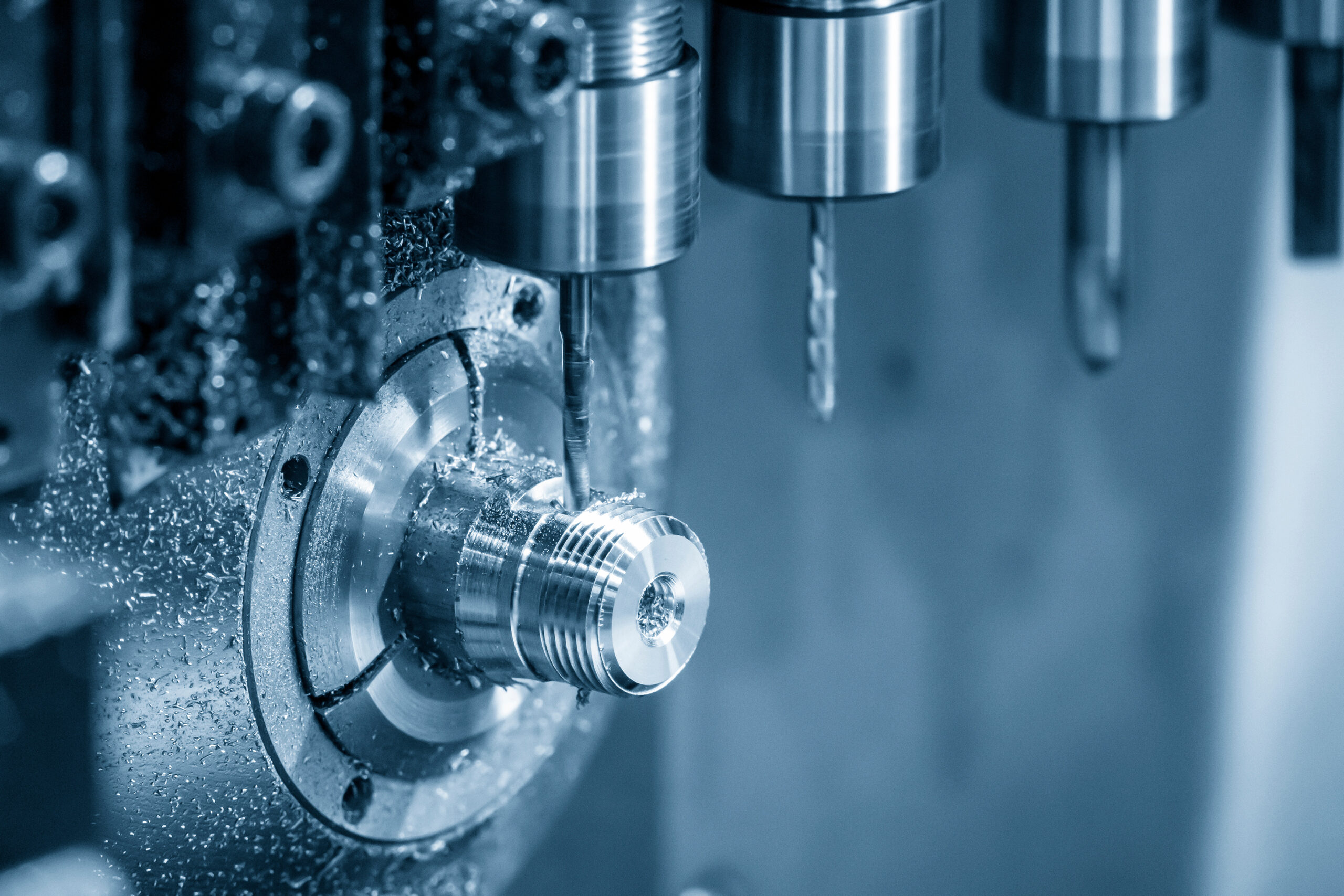
Choosing between Swiss machining and conventional CNC turning should begin with the drawing, not with the machine name. Both processes can produce accurate aluminum components, but they support the workpiece differently and handle certain geometries more efficiently. A short, rigid bushing may be a natural turning job. A long pin with small diameters, cross-holes, and closely related features may favor a Swiss-type machine. Order quantity, stock form, finishing, and inspection requirements can change the answer again. This guide shows engineers and buyers what to look for on a drawing before requesting a quote. The goal is not to declare one process better. It is to match the part’s shape, critical relationships, and production needs with a process that can control them consistently.
Start with the Feature That Is Hardest to Control
A part may look like a simple cylinder while hiding one difficult feature that controls the entire manufacturing plan. That feature might be a long reduced diameter, a thin wall, a deep internal bore, or a cross-hole that must remain correctly positioned to another surface.
Before discussing machines, mark the drawing’s most demanding requirements:
- The longest unsupported section
- The smallest diameter or thinnest wall
- The tightest relationship between two features
- Surfaces that must share a common axis
- Side holes, slots, flats, or off-center details
- Threads or sealing areas that require a controlled finish
Aluminum Is Easy to Cut but Not Always Easy to Hold
Aluminum generally supports efficient cutting, yet its lower stiffness compared with many steels makes support important for thin or slender geometry. A long section can deflect under cutting force. A thin wall can change shape under excessive clamping pressure. Material removal may also release stress and allow a feature to move after the fixture opens.
Alloy, Temper, and Stock Form Belong in the Review
The word “aluminum” is not a complete material specification. Alloy and temper affect strength, while bar, plate, and extrusion can present different stock allowances and manufacturing considerations. A process selected for a short 6061 bar component may not suit a long, thin part made from another alloy or stock form.
Teams reviewing material choice, chip control, workholding, surface finish, and dimensional risk can refer to this guide on machining aluminum without losing dimensional control. The important point is simple: process selection should reflect the material condition shown on the production drawing, not only the geometry of an early model.
Support Can Matter More Than Spindle Power
If the tool cuts far from the point where the stock is supported, the material can bend away from the tool. This may create vibration, diameter variation, or a poor surface. Increasing cutting power does not solve a support problem, and increasing clamping force can make a thin component worse.
The basic relationship is easy to understand:
Long unsupported stock
→ greater chance of deflection
→ more difficult diameter and finish control
→ more corrective passes or process changes
This relationship is one of the clearest reasons a drawing may point toward Swiss machining.
Conventional CNC Turning Fits Short and Stable Geometry
In conventional CNC turning, the workpiece rotates while fixed cutting tools remove material. The stock is commonly held in a chuck or collet, and additional support may be used when the geometry requires it. This approach is practical for many short or reasonably rigid components.
Typical candidates include:
- Bushings and spacers
- Short shafts and pins
- Flanges and collars
- Threaded sleeves
- Components with accessible face and bore features
- Parts whose critical work can be completed from one or two clear orientations
Conventional turning also offers flexibility when prototype quantities are low or when the part must move to a separate milling operation for a small number of side features. Using two operations is not automatically a poor choice. It may be the most sensible route when the setup is simple and the relationship between turned and milled features is not unusually demanding.
Swiss Machining Changes Where the Stock Is Supported
A Swiss-type machine feeds bar stock through a guide bushing so cutting can take place close to the support point. Instead of exposing a long section of slender stock, the process keeps the active cutting area near the guide. This helps reduce bending during machining.
Drawings That Deserve a Swiss Machining Review
Swiss machining is worth evaluating when the drawing includes several of these conditions:
- A high length-to-diameter ratio
- Long sections with small diameters
- Multiple diameters along a slender component
- Cross-holes, flats, grooves, or threads on the same part
- Features that should be completed with minimal reclamping
- Repeated production quantities that justify a more developed setup
Readers who need a clearer explanation of guide bushings, sliding headstocks, live tooling, and suitable part geometry can review when Swiss machining is the right process.
The process is not limited to parts that look complicated. A visually simple pin can be difficult if it is long and flexible. At the same time, Swiss machining is not automatically the right choice for every small round component. Very short, rigid parts with simple features may gain little from its support method.
Side Features Can Change the Whole Process Route
Many drawings combine turned geometry with features that do not share the main rotational axis. Examples include cross-holes, wrench flats, keyways, milled windows, radial threads, and identification grooves.
These details create a process-routing decision.
Route A: Turn, Remove, and Mill in a Second Setup
This route may suit prototypes, lower quantities, or parts with only one or two straightforward side features. It keeps the initial turning setup simpler, but the second operation must relocate the component correctly.
Route B: Complete More Features in One Machine Cycle
A machine with live tooling or Swiss-type capability may turn, drill, and mill without transferring the part to a separate fixture. This can help preserve relationships between features, although it may require more planning, tooling, and program development.
The drawing should guide this decision. If a side hole merely provides clearance, a second setup may be acceptable. If that hole locates a mating component relative to a bearing diameter, reducing datum transfer may have greater value.
No single row should decide the route. A short part with complex off-axis features may benefit from combined machining, while a longer part can sometimes be produced conventionally with an appropriate support strategy. The supplier should explain how the proposed process addresses the drawing’s main risk.
Production Quantity Can Change the Best Answer
For a prototype, engineers may accept separate turning and milling operations because flexibility matters more than cycle optimization. The first parts often exist to check fit, function, and drawing clarity. Investing immediately in a highly developed production setup may not be justified.
When evaluating custom CNC turning for production parts, repeat-order quantity changes the calculation. Extra setups create repeated handling, alignment, inspection, and scheduling work. A more integrated route may become attractive if it removes transfers or supports a slender part more consistently. However, process consolidation should solve a real manufacturing problem rather than serve as a selling phrase.
When conventional turning remains appropriate, buyers should discuss geometry, materials, secondary operations, and inspection needs. The useful question is not simply “Can you turn this part?” It is “Which process route protects the features that matter as quantities increase?”
Choose the Process That Controls the Drawing’s Real Risk
Swiss machining and conventional CNC turning are not competing labels where one is always more advanced. They solve different combinations of geometry, support, feature access, and production needs. Conventional turning is often a clear choice for short, stable components and flexible quantities. Swiss machining becomes valuable when long, slender stock needs support close to the cutting point or when several small features should be completed with fewer transfers. The correct route becomes clearer when the drawing identifies functional datums, critical relationships, material condition, finishing requirements, and expected volume. Buyers should ask suppliers to explain how the proposed setup controls the hardest feature. A process decision supported by the drawing is more useful than a recommendation based only on the part’s outside shape.
