


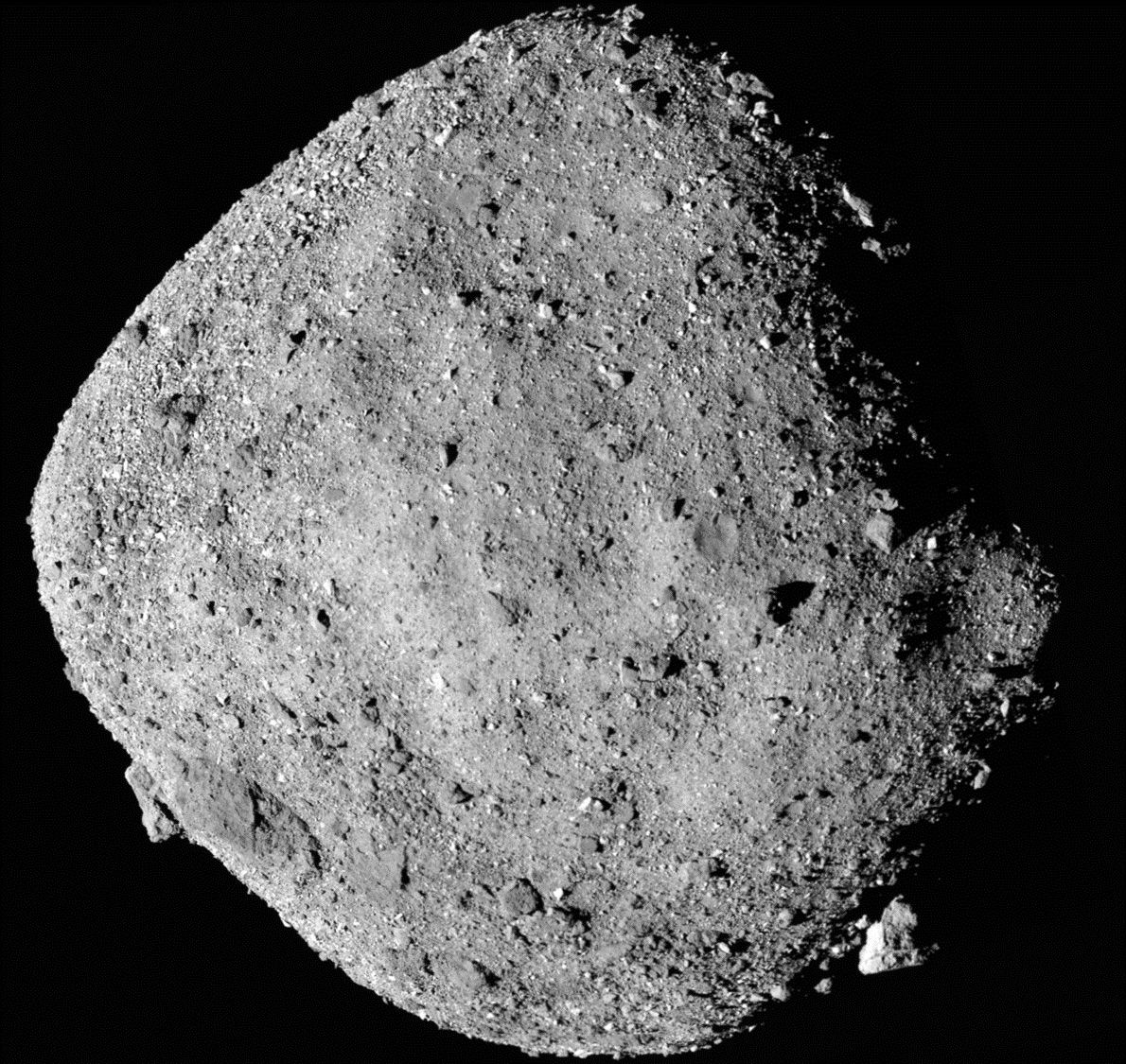
When NASA’s OSIRIS-REx spacecraft dropped a capsule of asteroid dust into the Utah desert in September 2023, it delivered about 121.6 grams of material from the asteroid Bennu, roughly double the mission’s goal. Studies published in early 2025 revealed what was inside: researchers identified 14 of the 20 amino acids that life on Earth uses to build proteins, along with all five nucleobases used in DNA and RNA, plus ammonia and a wide range of nitrogen-bearing organic molecules. A companion study found salts and minerals, including sodium-rich carbonates and phosphates, that appear to have formed when salty water evaporated on Bennu’s parent body billions of years ago. The findings suggest the parent body once held liquid water, creating conditions where organic chemistry could develop. Bennu itself is a rubble pile about 500 metres across, a fragment of a larger asteroid that broke apart in the early Solar System.
What the Evidence Shows
Scientists are careful about what the results do and do not mean. The compounds are ingredients, not life, and similar molecules have been found in meteorites and in samples from Japan’s Hayabusa2 mission to the asteroid Ryugu. What makes Bennu special is that the material was collected from a known source and kept pristine, so researchers can be confident the chemistry is genuinely extraterrestrial. The amino acids are a mix of left- and right-handed forms, with no preference for the left-handed versions that life on Earth uses, which deepens the mystery of why life chose one form over the other. Later analyses even found ribose, the sugar that forms the backbone of RNA, and glucose. Together, the results support the idea that asteroids like Bennu may have delivered the raw ingredients of life to the young Earth. Reporting and analysis from sources such as National Science Foundation track the same developments, and specialists following Bennu asteroid sample findings say the direction is now consistent across independent lines of evidence.
The Wider Context
The wider context is a research landscape in which replication and open data now decide reputations. Findings connected to Bennu asteroid sample findings are being checked by independent groups with shared datasets, and the teams involved publish their methods in full so rivals can test every step. That discipline is slower than a headline cycle, but it is why results in this area increasingly survive first contact with scrutiny.
What Happens Next
What happens next in the story of Bennu asteroid sample findings will be decided by follow-up work already under way: larger samples, longer observation and instruments that have not yet come online. The researchers involved are unusually united on one point, that the current results justify the next investment of time and money. Readers will not have to wait long for the first tests of that claim. You can follow related developments in our coverage of science.
There is a practical lesson in all of this for readers deciding what to do today. Start with the verified facts, be wary of anyone promising certainty, and prefer reversible steps while the evidence is still developing. Circumstances differ by country, income and personal situation, so general guidance should always be weighed against your own context before you act on it in any significant or lasting way.
