


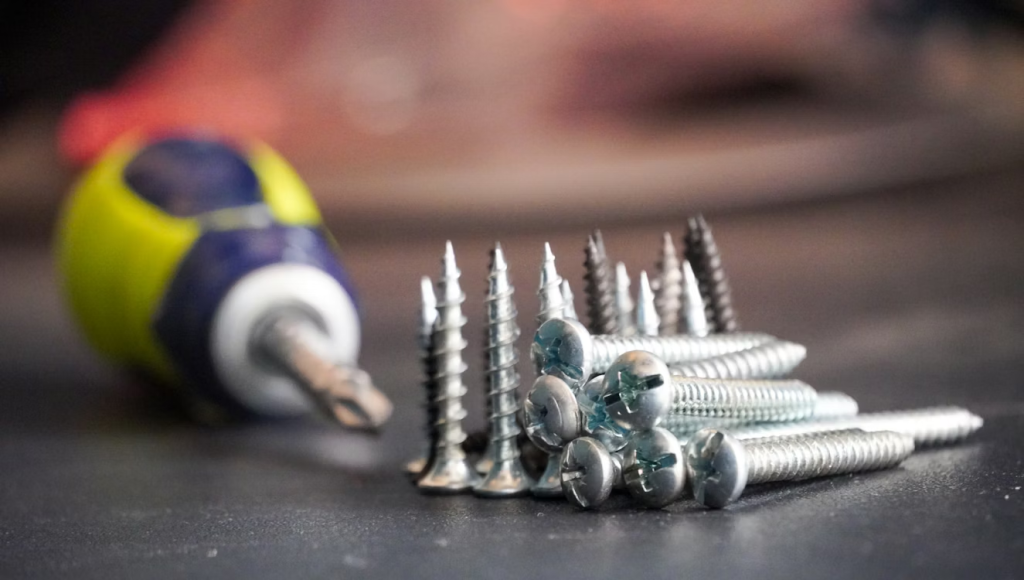
If we consider a skyscraper, a bridge, or even a workbench, we can’t help but be fascinated by the sheer size and scope of the beams and materials used to define the structural integrity of these buildings. We marvel at the steel girders or timber frames used to hold everything together. What we do not see, however, is that it is not always these larger elements that define structural integrity. Instead, it is often the smallest elements used in these structures that define their strength. That is, it is the fasteners.
Structural integrity is defined as “the ability of a structure to carry loads without failing, tearing, or collapsing.” This is a function of continuity. If there is no continuity within the points at which two structural elements meet, it doesn’t matter how strong these elements are. This is why it is not simply a matter of convenience to choose the right screws and rivets, but it is also a matter of safety, which is essential to any professional.
Selecting the Right Screw for the Job
There are many different screws, each designed to withstand different forces. For the most part, these forces are defined by tension and withdrawal. For example, wood screws have a coarse thread and are designed to pull two pieces of wood tightly together. If, instead, a person were to use a fine-threaded machine screw, it would not pull two pieces of wood tightly together, since it would not be able to dig deep enough to hold any significant amount of weight.
On the other hand, machine screws are designed for precision. They are always used in conjunction with nuts or tapped holes in metal. They are required for machinery or steel frameworks where movement should be minimal. There are also self-tapping screws. They are very important in sheet metal. They create their own mating threads as they are inserted into the material. This guarantees a close fit and prevents loosening. However, using a self-tapping screw instead of a bolt in a high-stress structural situation would be a weak point that could tear away.
The Permanent Power of Rivets
Screws are always required for applications that can be disassembled. However, for applications that need permanent fastening and vibration resistance, rivets are the best choice. The difference between the various kinds of rivets is equally important. Solid rivets are the oldest and most reliable kind of fasteners. They are always required for aircraft and steel bridges, and they possess immense sheer strength. They are also very difficult to remove. In fact, they become an integral part of the material that they are fastening.
On the other hand, blind rivets are known as pop rivets. They are equally important because they’re required for applications where it is impossible to access the back side of the fastened material. They are always required for applications that need vibration resistance. A common mistake in structural changes is using a blind rivet instead of a solid rivet for easier assembly. This greatly reduces the load capacity of the fastened material.
Why Material Composition is Crucial
Besides the mechanical properties of the fastener, the material it is made of also plays a defining role in the long-term structural integrity of the structure. In the case of harsh weather, the fastener’s resistance to corrosion also plays a critical role. Stainless steel fasteners are known to have a high resistance to corrosion. Therefore, they are best suited for use in structures that are exposed to harsh weather. On the other hand, the stainless steel fasteners are softer compared to steel fasteners. Therefore, they might not be able to withstand the same level of tension force.
Another factor that undermines the structural integrity of a structure lies in the galvanic corrosion that occurs between two dissimilar materials that are in contact. In the presence of an electrolyte like moisture, the two materials are said to be in contact. In the case of a structure that uses stainless steel fasteners to hold together aluminium sheets, the fasteners cause the aluminium to corrode quickly. Over time, the hole created in the aluminium sheet widens, causing the structural integrity to cease to exist. A professional must work with premium rivet manufacturing specialists ensure that the fastener and the main structure are made of the same material or use a protective coating like zinc plating or galvanisation.
Ensuring Safety Through Selection
The difference between a structure that lasts for decades and another that fails after a short period lies in the choice of fasteners. The fasteners are responsible for holding the structures together. In the case of a steel bridge that uses solid rivets, the fasteners are responsible for the shear strength. In the case of a wood screw that holds a timber frame together, the fastener also has a responsibility. By understanding the distinct properties of both the screw and the rivet, the professional ensures that the structures they build are safe, stable, and enduring!
