


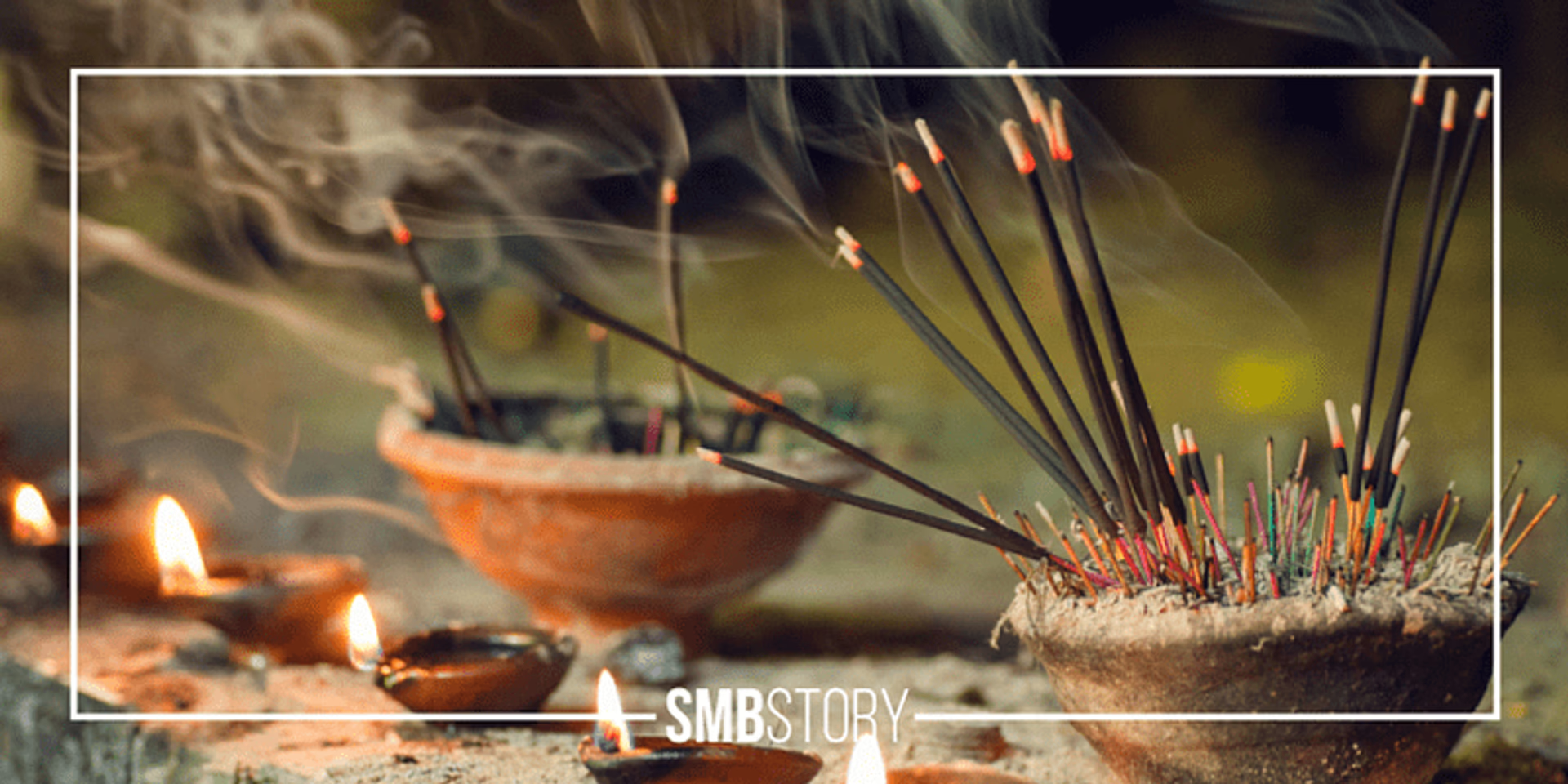
The incense sticks manufacturing industry in India represents a unique combination of heritage, craftsmanship, and evolving production methods. For centuries, incense—known locally as agarbatti has been a part of cultural ceremonies, religious rituals, wellness practices, and everyday home fragrance use. Over time, what began as an artisanal craft has transformed into a structured sector that contributes significantly to domestic markets, exports, and rural employment. Today, India is recognized globally as a leading incense sticks manufacturer, supplying products to various regions across the world.
Historical Background and Cultural Significance
Incense making in India dates back many centuries, tied closely to the country’s spiritual and cultural traditions. Ancient scripts and archaeological findings indicate the use of aromatic resins, oils, and herbs in temples, ceremonies, and royal households. Over time, this tradition evolved into a specialized craft practiced by local communities.
The widespread use of incense in Indian households helped the industry grow into a steady and sustainable market. As global demand increased, Indian manufacturers began modernizing processes while keeping foundational traditions intact.
Key Historical Highlights
- Incense was historically prepared using natural resins, herbs, and plant extracts.
- Early incense production was largely a small-scale, home-based activity.
- Rising cultural exchange and global curiosity helped Indian incense enter international markets.
Industry Structure and Major Production Hubs
India’s incense sticks manufacturing sector is diverse, consisting of cottage units, mid-sized factories, and large manufacturers with automated production capabilities. This layered structure allows the industry to maintain traditional hand-rolling skills while adopting modern efficiency where needed.
Major Manufacturing Hubs in India
- Mysuru and Bangalore (Karnataka) – Known for high-quality agarbatti and traditional fragrance blending.
- Ahmedabad (Gujarat) – A major center for mechanized production and raw material supply.
- Kolkata (West Bengal) – Known for bamboo stick processing and labor-intensive rolling units.
- Parts of Tamil Nadu and Maharashtra – Emerging hubs with advanced manufacturing setups.
These regions collectively play a major role in meeting the domestic demand and supporting India’s strong export presence.
Raw Materials and the Manufacturing Process
The manufacturing process of incense sticks involves a detailed combination of raw materials, rolling techniques, and fragrance formulation. While traditional manufacturers rely heavily on manual labor, many modern factories use semi-automatic and fully automated machines to increase output.
Common Raw Materials
- Bamboo sticks
- Charcoal powder
- Wood powders such as pinewood and sawdust
- Jigat / Litsea glutinosa (a natural binder)
- Essential oils and aromatic compounds
Typical Stages in the Manufacturing Process
1. Preparation of the base paste using charcoal, jigat, and wood powders.
2. Rolling the paste onto bamboo sticks, either manually or with machines.
3. Drying the sticks in well-ventilated spaces or controlled environments.
4. Fragrance application using dipped oils, sprayed compositions, or infused mixtures.
5. Packaging in moisture-resistant wraps to preserve aroma strength.
Important Quality Factors
- Even burning
- Consistent fragrance release
- Low-smoke properties
- Natural and safe ingredients
Modern manufacturers increasingly focus on eco-friendly production by reducing charcoal use, choosing herbal ingredients, and adopting sustainable fragrance formulations.
Industry Trends and Technological Advancements
The incense sector is evolving rapidly, driven by changes in consumer preferences, environmental expectations, and international regulatory standards.
Notable Trends Shaping the Industry
- Growing demand for low-smoke or zero-smoke incense
- Rising preference for natural and herbal fragrances
- Use of automation in rolling, drying, and packaging
- Development of charcoal-free incense variants
- Increased use of aroma science and professional fragrance blending
Manufacturers are also adopting international certifications to meet global compliance requirements in export markets.
Export Growth, Global Demand, and Market Expansion
India is one of the largest exporters of incense sticks, supplying products to regions such as the United States, United Kingdom, Middle East, Africa, and Southeast Asia. The rise of aromatherapy, meditation, and home fragrance trends has further expanded the demand for Indian incense.
Factors Driving Global Preference for Indian Incense
- Long-lasting, diverse fragrance profiles
- Competitive pricing
- Skilled craftsmanship and traditional techniques
- Improved packaging and branding
- Rising presence of certified, export-focused manufacturers
The export segment is expected to grow steadily due to increasing global interest in wellness and natural aromatic products.
Socio-Economic Contributions
The incense sticks manufacturing industry has long been associated with rural empowerment and community-based employment. A large portion of incense rolling, drying, and packaging is carried out by women in rural and semi-urban areas.
Key Socio-Economic Benefits
- Provides sustainable livelihood opportunities
- Supports cottage and small-scale industries
- Enables flexible working hours, especially for women
- Encourages skill-based development
- Strengthens local economies with minimal investment requirements
Government schemes and industry collaborations have further supported training, raw material supply, and modern production adoption.
Emerging Brand and Their Market Impact
Modern incense sticks manufacturers are focusing on brand value, product consistency, and fragrance innovation to meet evolving market expectations. Many companies now offer curated fragrance collections, premium incense lines, and export-oriented products.
Melting Aromas, for example, is among the manufacturers contributing to this shift by offering diverse fragrance profiles, adopting updated manufacturing methods, and developing incense products suited for both domestic and international buyers. Such brands are making Indian incense more accessible through e-commerce platforms and global distribution channels.
Important Points About the Industry
- India is one of the world’s leading incense sticks manufacturers and exporters.
- The industry blends tradition and modern manufacturing technologies.
- Major raw materials include bamboo, charcoal, jigat, wood powders, and fragrances.
- Key hubs include Mysuru, Bangalore, Ahmedabad, Kolkata, and parts of Tamil Nadu.
- Export demand is fueled by global wellness and aromatherapy trends.
- Many manufacturers are shifting toward low-smoke, herbal, and eco-friendly incense.
- The sector generates significant employment, especially for rural women.
- New-age brands like Melting Aromas contribute to modernization and global expansion.
